
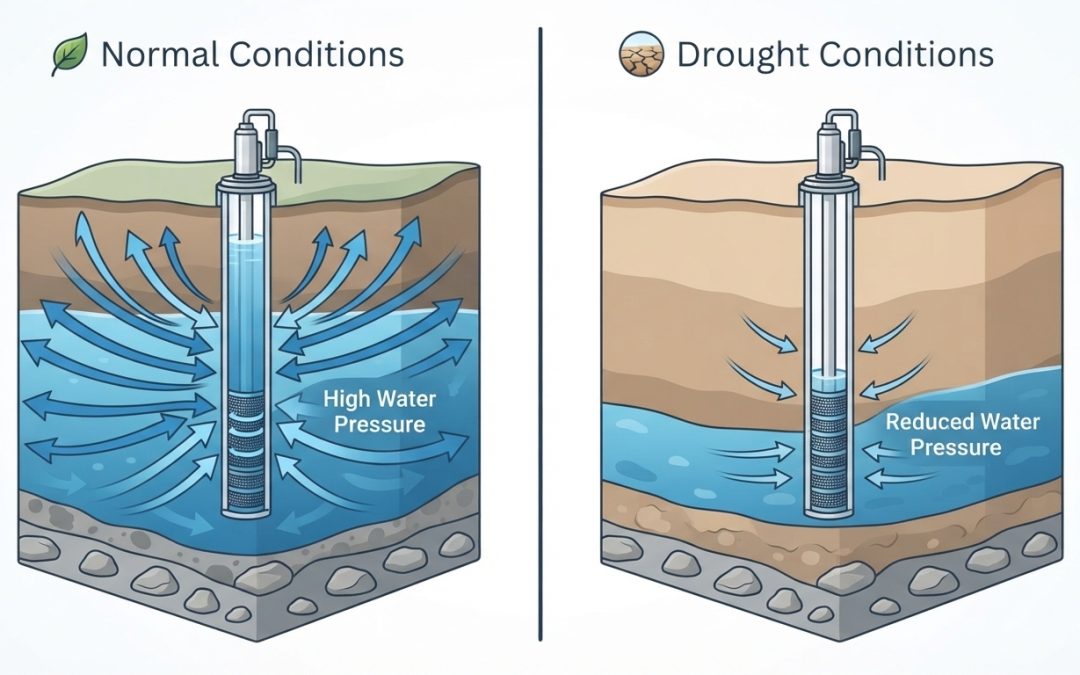
When you rely on a private water well, drought conditions can affect far more than just how much water is available underground. The real issue isn’t simply “using too much water”—it’s that drought lowers the water table and reduces the natural pressure that normally helps your well refill. When that pressure drops, your well’s recovery rate slows down, and if water usage isn’t adjusted, the well system can be damaged long before the aquifer actually “runs dry.”
Understanding how drought affects your well—and how to respond—can protect your pump, extend the life of your system, and prevent costly repairs.
How Drought Changes the Water Table
During normal conditions, the aquifer beneath your property stays at a stable level. That water level creates hydrostatic pressure, which pushes water into your well and allows it to refill quickly after use.
But during drought:
- Rainfall decreases
- Groundwater recharge slows
- Regional water tables drop
- Hydrostatic pressure declines
This means the water in your well sits lower than normal, and the aquifer isn’t pushing water into the well with the same force it used to.
Why Lower Pressure Means Slower Recovery
A well doesn’t refill because the pump “pulls” water in—it refills because the aquifer pushes water into the well. When drought lowers the water table, that push becomes weaker.
As a result:
- Your well refills more slowly
- The pump draws water down faster than the aquifer can replace it
- The water column inside the well becomes thinner
- The pump may begin pulling air or sediment
This is why two wells in the same area can behave differently: even small differences in depth, construction, or aquifer connection can cause one well to recover normally while another struggles.
It’s Not About “Using Too Much Water”
Many homeowners assume drought problems come from excessive water use. In reality, the problem is usually reduced recovery rate, not increased demand. It’s common for neighbors to start turning on each other with accusations of water usage, but it is very unlikely that your neighbor on a domestic well is impacting your water supply. Your neighbor may have a deeper well with better recovery or be in a location with better flow from the aquifer, but their water draw is barely able to impact your water supply. Comparable to the changes based on the phase of the moon. Minuscule in comparison to the actual problem, which is low pressure from the aquifer itself.
Even normal household usage—laundry, showers, irrigation, livestock watering—can exceed the well’s ability to refill during drought conditions. What used to be a safe amount of water use becomes too much simply because the aquifer isn’t supplying water at its usual rate.
This is why adjusting water usage during drought is essential. You’re not “saving water” in the aquifer—you’re preventing your pump from outrunning the aquifer’s ability to refill your well.
How Drought Can Damage Your Well Equipment
If the well’s water level drops below the pump intake or the pump begins to outrun the recovery rate, several problems can occur:
- Pump overheating Submersible pumps rely on water flow for cooling. Low water levels reduce cooling and can burn out the motor.
- Air entrainment Pumps are not designed to pump air. Pulling air causes cavitation, vibration, and premature failure.
- Sediment intake As water levels drop, pumps may begin pulling silt or sand, damaging impellers and clogging plumbing.
- Pressure tank cycling issues Slow recovery can cause rapid cycling, short cycling, or failure to build pressure.
- Complete pump burnout If the pump runs dry, it can destroy itself in minutes.
Besides equipment damage, continued pushing of water usage during low flowing recovery rates can damage the well itself through increased sediment pulling into the well during recovery. This sediment builds up and blocks the screens slowing recovery even more. If enough sediment gets into the well it can make the well near impossible to repair.
These failures are expensive and avoidable.
What Homeowners Should Do During Drought Conditions
1. Monitor Water Usage
Reduce or stagger high‑demand activities:
- Irrigation
- Filling pools
- Long showers
- Laundry loads
- Livestock watering
Spacing out usage gives the well time to recover.
2. Watch for Warning Signs
Common indicators of drought‑related well stress:
- Water sputtering or air in faucets
- Cloudy or sandy water
- Pressure drops
- Longer recovery time between cycles
- Pump running longer than normal
3. Know Your Well’s Recovery Rate
A professional flow test can determine:
- Static water level
- Pumping water level
- Recovery rate
- Drawdown behavior
This helps you understand how much water your well can safely supply during drought.
4. Consider Temporary Usage Adjustments
If recovery slows:
- Reduce irrigation
- Spread out household water use
- Add storage tanks
- Install low‑flow fixtures
- Use drought‑tolerant watering schedules
5. Protect Your Pump
Ask your well professional about:
- Pump protection devices
- Low‑water cutoff switches
- Flow restrictors (also known as a dole valve)
These devices can prevent catastrophic pump failure.
The Bottom Line
Drought doesn’t just reduce the amount of water underground—it reduces the pressure that normally keeps your well refilling quickly. When that pressure drops, your well’s recovery rate slows, and even normal water usage can exceed what the aquifer can supply.
If homeowners don’t adjust their water usage during drought, they risk damaging pumps, pressure systems, and plumbing—often long before the well actually “runs out” of water.
Understanding how drought affects your well and taking simple steps to protect your system can save thousands of dollars and keep your household water supply reliable through dry seasons.