
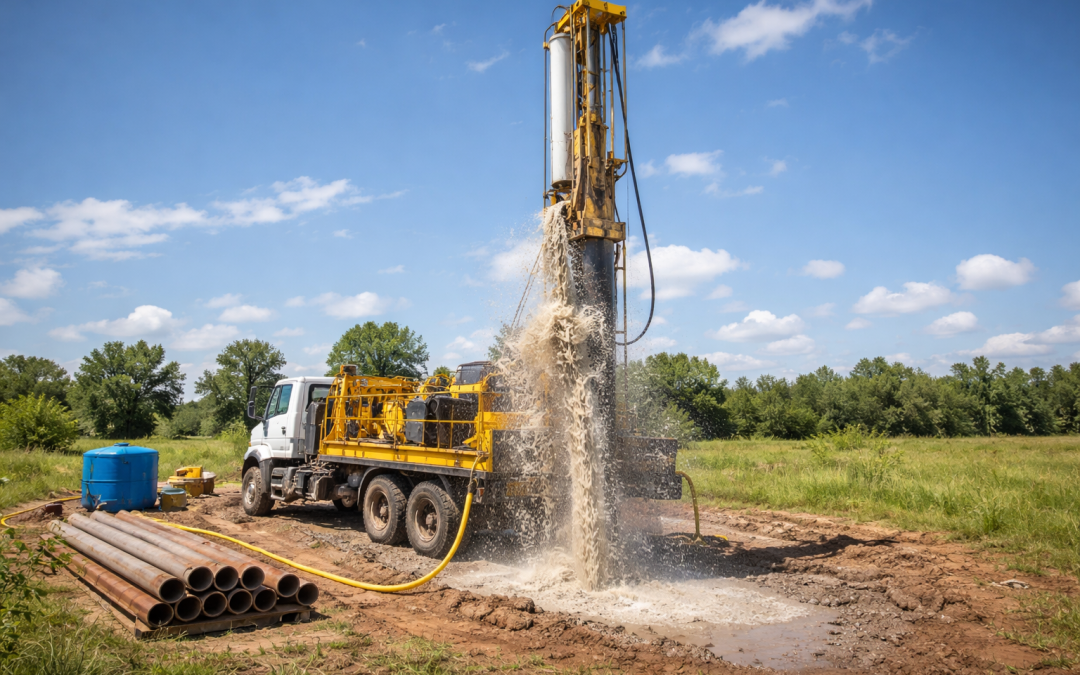
Thinking about drilling a new water well in Oklahoma? This comprehensive guide is meant to set you on the right track and give you general advice concerning the process, rules and regulations, and costs associated with drilling a new water well.
Step One: Evaluating the location before purchase.
Is there a previous well? Sometimes an existing well can offer a lot of information about the potential for water accessibility as well as a potential source of water. Ace Water Well offers rehab services for older & neglected wells and has a good success record with repairing wells that were once thought to be abandoned. If anything, it might inform you of the static water depth, also called first water or the top of the local water table, of the area. Rehabbing an old well can reduce your potential investments required for the property by many thousands of dollars.
What was the land previously used for? Some land use can leave the ground at a little more high risk for water usage and contamination issues. Animal feed lots, old burn pits, waste water lagoons, septic systems, and old burn pits are all things to consider when looking at a property where you want to utilize the ground water supply. Look for signs of chicken pens, stables, and feeding troughs. Even a discontinued septic system or old waste lagoon isn’t something you will want to place a water well nearby. By drilling code, a feed lot or waste water lagoon needs to be at least 300 feet from the new well location. These rules are in place to prevent the real possibility of ground water contamination, so knowing a little background on the property usage and being mindful of such things is important before jumping on a land purchase with risky ground water access.
Step Two: Calculating Costs
In Oklahoma, drilling permits are generally not required for residential wells. The standards for non-permitted domestic water wells are the responsibility of the driller. This is why it is important to choose a driller with a good reputation and track record. The old adage of “You get what you pay for” really comes into play when choosing the right driller. Prices can vary with season and material costs in the market, so everything shared in this guide is a best guesstimate based on reports from customers and a variety of direct market data collection sites. Definitely get direct quotes before moving on any investment.
The drilling cost is usually calculated and charged by the drilling feet, or the total depth of the final well. This is not a fixed element in the estimate, which is why it’s always good to estimate a little high when preparing a budget. In the year of 2025 the average well drilling costs in Oklahoma ranged from $25 – $50 per foot. Many drillers also have a 100 foot minimum requirement. So if a well needs to be at 75 foot depth for good quality water, they will still charge for 100 ft to cover the costs associated with bringing the rig onto the property and the setup time involved in the project. So if they are charging $40/foot, your 100 foot well is going to run you $4000, which typically includes the price for the drilling and the casing, pack gravel, and annual seals that are poured at the proper depths. That price will leave you with what is typically a 4” straw going into the earth with a quality amount of water at the bottom to draw from, usually 30 – 100 ft of water is common for a domestic well. The depth of water isn’t quite as important as the GPM (gallons per minute) that the well recovers at. At the time of drilling, the driller will be pushing high pressure air down the well and determining how much water comes up the top tells him the average GPM recovery of the well. This is an important number and will be a deciding factor on the size of the system you can install in the well and the amount of water you can use regularly.
Step Three: Get an early idea of depth and GPM for a specific area
There is no definitive way to know what quality of water a specific spot in the ground will produce. That said, there are still old men who will use divining rods and tell you they know better, but without having to ask the four winds where the water is, you can do a little research online and get a general idea of the type of water in your area. Although not definitive, this will give you an idea of the area and a starting point to base estimated budgets for a project.
The OWRB, the Oklahoma Water Resource Board, keeps a record of drilled wells which contains information on the total depth and GPM at that depth at the time of drilling. You can navigate on their map to your specific address, or GPS coordinates and look in the surrounding area. Click the link below to navigate the OWRB Logged Wells Map.
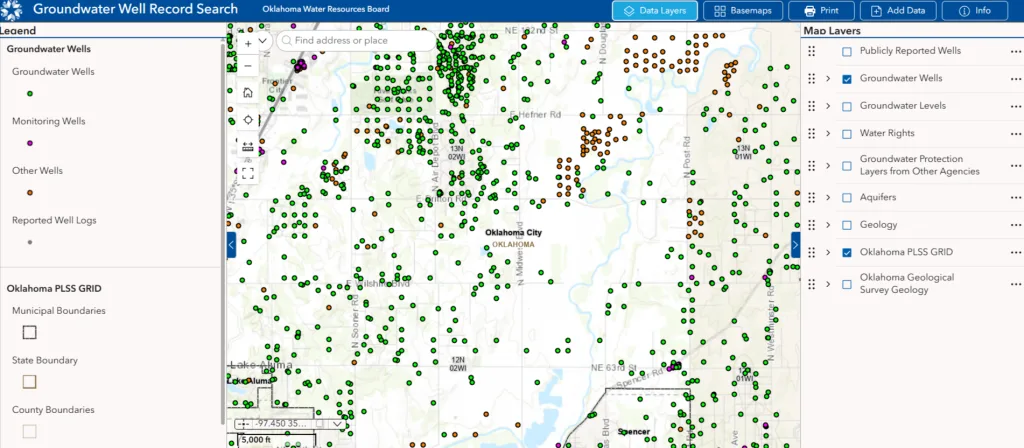
You will want to focus on the green dots, as those are drilled water wells. There are many other types of drills for other purposes and might not give you as useful information, so focus on the green dots when collecting information. There is a search button on the map to locate an address, or you can click the target button to pin your exact location where you are standing if you are on your cell phone at the property and use that to navigate the area looking for nearby logged wells. Clicking a well will give you the detailed information about who drilled it and who the property owner was at the time. It will also tell you the total depth, first water, and Approximate Yield (GPM). These are key pieces of information. It’s important to not assume that a nearby well will guarantee the same results. Wells can vary greatly just a few hundred feet from each other, so try to accumulate data from a handful of nearby wells going in every direction. If you don’t find a lot of wells in the area, within a few miles radius, that could be a red flag and something to discuss with your chosen driller.
Use your average total depth to budget your drilling costs and your average of the GPM to plan how much water you may have access to on the property in question. These are assumptions and need to be taken into consideration with the lay of the landscape elevation and even the type of vegetation on the property. At some point, you will want to meet with a driller on the property to determine the precise location of the drill and discuss the potential outcomes and desires for water quality. Other data that isn’t logged or well established, except through Well Technicians with years of experience is the type of water quality, acidity, hardness, and other possible complications that can happen in each area of Oklahoma.
Step Four: Contact A Driller
When choosing a driller, look for customer reviews and recommendations from others in the area. You can also look at local logged wells in the area and see what drillers have recently been working in your area. Local knowledge of the geology is very helpful with knowing expectations and water quality. The OWRB lists all current license holding drillers in the state through their web portal, but it can be a tad confusing to navigate, so we have created a map based list to help you find drillers located near you. Some drillers will travel far, others like to stick to their area.
Work with your driller to understand the risk and likely outcomes of a drill job on your location. On the day you meet with your driller on location, either for an evaluation or to begin the drilling, communicate your desired use for the property and where you would like to locate the well head and other components of the water system. If this is done during a consultation before the drilling begins, it’s a good idea to mark the desired locations with flags or pipe in the ground and take pictures to document the state of the property. The driller will need to be able to safely access the location with very heavy equipment. Trees, powerlines, and the structural layout of the ground will all be factors they may have concerns over for specific locations. Confirm that your desired location will meet their needs and mark and document those arrangements. At that point, you can schedule the drilling, but be aware that due to the size of the equipment and the dangers of having drilling equipment hoisted into the air during lightning storms, their schedules are sometimes more fluid than rigid and you may need to allot them a larger window of time to complete the drilling during rainy or stormy seasons.
Final Note: Drill before you build
If you are building in an area where municipal water is not a reasonable option, it is of utmost importance that you plan and drill your well before getting too deeply invested in the property. Knowing you have access to a clean sustainable water source is pivotal before laying the foundation for a home. You don’t want to build a home only to later learn the water supply under you is going to require a heavy investment of filtration or massive storage tanks to provide enough GPM for your water needs. It’s just wise to confirm your water source before moving forward on other investments.